One Piece Turma Da Monica
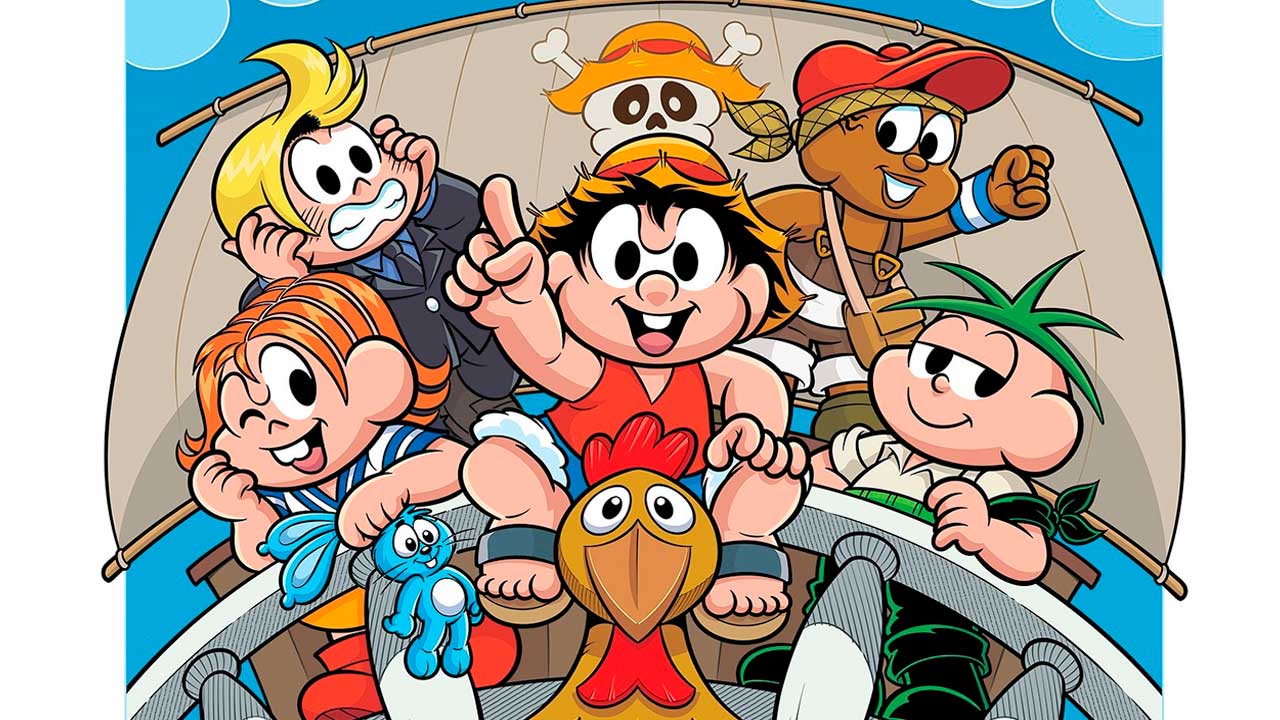
The Origins of One Piece Turma Da Monica
The idea of One Piece Turma Da Monica emerges from a joyful meeting between two powerhouse comics cultures, Brazilian and Japanese, each with a rich history of serialized storytelling. Monica’s Gang, created by Mauricio de Sousa, has spent decades exploring school life, family dynamics, and neighborhood adventures, making the characters feel like close friends to generations of readers. Meanwhile, One Piece, crafted by Eiichiro Oda, sails across oceans in search of dreams, treasure, and freedom, building an expansive world of pirates, marines, and mysterious islands.
When creators imagine One Piece Turma Da Monica, they play with contrasts and harmonies, placing the Straw Hats into the sunny, grounded streets of Downtown, or letting Monica and her friends board the Thousand Sunny. These stories highlight how both worlds value loyalty, courage, and the willingness to protect others, even when the adventures look very different on the surface. By respecting the core themes of each series, such crossovers celebrate what makes them special while opening doors to fresh narratives and unexpected team-ups.
Character Dynamics and Pairings
In One Piece Turma Da Monica, character dynamics become a playground for creative reinterpretation, as the personalities of the pirates mesh with Monica’s circle. The easygoing leadership of Luffy might echo the way Smudge and Maggy navigate their chaotic group of friends, while Zoro’s stern focus could pair with Jimmy Five’s occasional bursts of determination. Supporting roles also shine, with characters like Nami fitting naturally into Monica’s world as a clever planner organizing treasure hunts or neighborhood rescues.
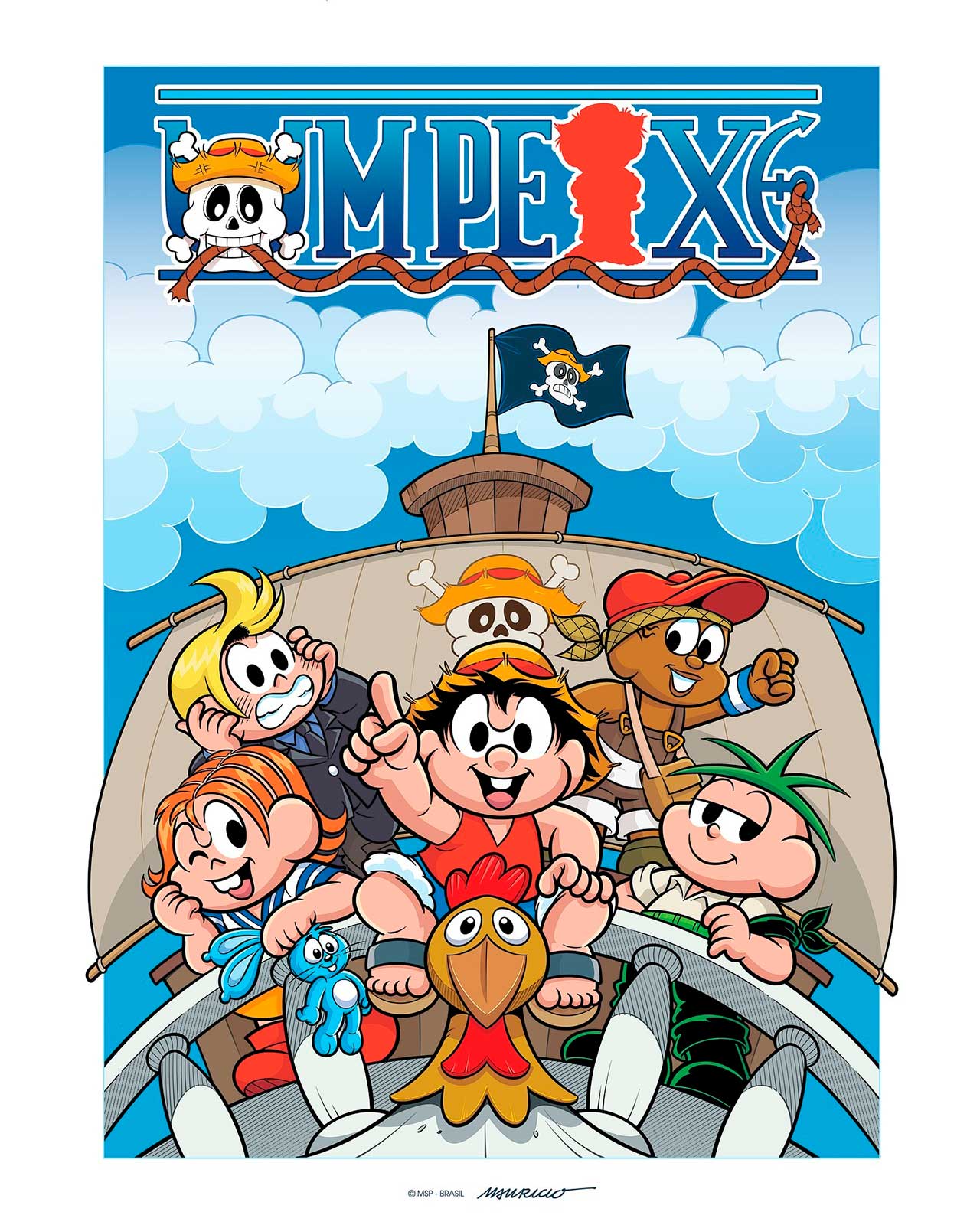
- Luffy and Monica as fearless leaders who inspire their friends to chase big dreams while staying grounded in friendship.
- Zoro and Smudge sharing a quiet, dependable presence, often the ones tasked with keeping pranks from going too far.
- Nami and Maggy teaming up on clever schemes, balancing daring adventures with practical plans for snacks, allowances, and comic-book fame.
These pairings highlight how both casts grow when they learn from one another, turning simple gags and action scenes into moments that reveal deeper values. Jokes that come from cultural misunderstandings or different priorities also allow the stories to explore how diverse groups build trust and find common language, even when their first impressions are comically off.
World-Building and Settings
World-building in One Piece Turma Da Monica expands the familiar streets and schoolyards of Monica’s Gang into a space where grand adventure can quietly coexist with slice-of-life charm. Artists might redraw Downtown as a harbor town echoing the ports visited by the Straw Hats, complete with markets, docks, and mysterious visitors arriving by ship. At the same time, the fantastical elements of One Piece, like Devil Fruits and ancient weapons, can be reimagined as neighborhood legends or school projects that spark wild, harmless rumors.
Such mashups invite creators to explore how everyday problems and big heroic quests reflect similar emotions, like the fear of losing a friend or the excitement of discovering something unknown. By shifting between the detailed maps of the Grand Line and the cozy layouts of Monica’s block, stories can highlight how courage appears not only in epic battles but also in standing up to a bully or helping a neighbor in need. This blending of scales keeps the tone playful while still honoring the stakes that make both originals compelling.
Art Styles and Visual Storytelling
The visual language of One Piece Turma Da Monica becomes a fascinating study in contrast, as the rounded, expressive designs of Monica’s Gang meet the dynamic, muscular silhouettes and detailed landscapes of Oda’s art. Some fan works and experimental official specials emphasize chibi expressions during comedic scenes, then shift to more detailed, shonen-inspired action when the story demands intensity. Backgrounds might mix the sunny, open layouts of Brazilian cities with the intricate ship designs and island vistas that define One Piece’s sense of scale.
- Color palettes that borrow Monica’s bright, saturated tones while incorporating the bold contrast and dramatic shading common in pirate adventures.
- Panel rhythms that alternate between compact gag strips and sprawling saga pages, guiding the reader’s eye with speed lines, dramatic silhouettes, and imaginative sound effects.
These artistic choices help signal shifts in tone, so readers instantly recognize whether a scene is a lighthearted prank or a turning point that changes the fate of the crew. When done well, the visual fusion feels like a celebration of both styles, inviting longtime fans to see their favorite worlds through a new lens while welcoming newcomers with familiar, approachable art.
Themes of Friendship and Adventure
At its heart, One Piece Turma Da Monica emphasizes themes that resonate across age groups, namely the enduring power of friendship and the excitement of exploring the unknown. Both casts choose to protect one another, whether that means defending a fragile dream like finding the One Piece or ensuring that a classmate does not face a difficult situation alone. The crossover naturally highlights how loyalty can bridge differences in background, appearance, and even species, as monsters, pirates, and ordinary kids learn to cooperate.

Adventure in these stories is not just about battles or treasure; it is about the growth that happens when characters step outside their comfort zones. A story might follow Monica and her friends as they help the Straw Hats navigate a confusing city, while the pirates share tales of the sea that inspire the kids to set their own goals. This mutual encouragement reinforces the message that dreams are more attainable when shared, and that every person, no matter how small or mischievous, can contribute something vital to the journey.
Impact on Fans and Cultural Exchange
For fans, One Piece Turma Da Monica represents a bridge between regions and generations, uniting Brazilian and Japanese pop-culture enthusiasts through a shared love of creative storytelling. Such projects can introduce younger readers to classic Brazilian comics while deepening the appreciation of long-time One Piece followers for the emotional depth of Monica’s Gang. The mashup also showcases how universal themes like courage, kindness, and perseverance translate across cultural boundaries, proving that great stories can thrive anywhere.
By imagining how these two worlds interact, creators honor the spirit of both originals, avoiding cheap gags in favor of meaningful interactions that respect the struggles and joys at the core of each cast. In a broader sense, these fan-inspired conversations highlight the potential for collaboration and mutual inspiration in the global comics and animation industries, encouraging more cross-cultural projects that celebrate diversity while focusing on the simple joy of telling unforgettable stories together.
Conclusion
One Piece Turma Da Monica captures the imagination by uniting two iconic franchises, offering a space where epic pirate adventures and heartfelt neighborhood tales coexist with humor and warmth. Through thoughtful character dynamics, inventive world-building, and a blend of artistic styles, such crossovers celebrate the universal themes that make both series enduring favorites. For fans and newcomers alike, this fusion opens a playful window into what happens when dreams, loyalty, and community sail toward new horizons.
TUDO sobre o CROSSOVER DE ONE PIECE COM TURMA DA MÔNICA #anime #onepiece
Simplesmente o zorolinha e o cascanji são muito geniais eu amei esse crossover de One Piece.
